Ethical crystal sourcing embodies the confluence of advanced geosciences, cryptographically secured supply chain auditing, and stringent ecological stewardship. This discipline seeks to transform the extraction, processing, and distribution of raw minerals globally.
The industry is undergoing a significant shift, moving from historically opaque and environmentally damaging practices toward regulated frameworks emphasizing responsible mineral resource management. This evolution prioritizes accurate identification of a stone’s geographic origin, comprehensive evaluation of its environmental impact, and the integration of cutting-edge technologies to ensure compliance with rigorous global standards throughout the mineral’s lifecycle.

Provenance Verification and Ecological Standards
Core benchmarks in ethical sourcing include geochemical fingerprinting, which applies spectroscopy to ascertain both mineralogical composition and precise geographic origin. Immutable ledger tracking employs decentralized blockchain networks to securely document the gemstone’s chain of custody from extraction through processing, enhancing supply chain transparency.
To minimize ecological harm during cutting and polishing, closed-loop fluid recycling systems are mandated to eliminate toxic effluent discharge. Rigorous subterranean rehabilitation protocols require physical and biological restoration of mined cavities post-extraction.
Furthermore, algorithmic prospectivity harnesses artificial intelligence to analyze hyperspectral satellite imagery, thus reducing unnecessary land disturbance during exploration.
Geological Formation and Extraction Mechanics
Crystallization and Mineralogical Characteristics
The physical properties of gemstones are determined by deep-earth conditions present during formation. Quartz, primarily silicon dioxide, crystallizes within hydrothermal veins as silica-rich fluids cool under substantial subterranean pressure.
The distinctive coloration arises from trace elements and natural radiation incorporated during growth; for example, localized iron isotopes combined with geothermal radiation induce the structural changes responsible for amethyst’s characteristic purple hue.

Similarly, the hues observed in uncut brown diamonds relate to their atomic lattice architecture. Extreme heat and pressure in the Earth’s mantle arrange carbon atoms into a rigid lattice, while nitrogen impurities trapped in this structure absorb specific light wavelengths.
This absorption reflects yellowish-brown tones characteristic of such diamonds. These atomic signatures provide critical verification points for ethical sourcing and quality assurance by enabling geologists to confirm the exact regional origin of each stone.
Optical Phenomena and Structural Integrity
Beyond coloration, the internal optical and physical attributes influence processing methods and commercial viability. Many ethically mined gemstones exhibit pleochroism—an optical phenomenon where colors shift depending on crystallographic orientation due to differential light absorption.
Skilled gem cutters analyze these axes meticulously to optimize the stone’s brilliance.
Structural integrity is assessed via Mohs hardness, a qualitative scale measuring resistance to scratching from talc (hardness 1) to diamond (hardness 10). Minerals with lower hardness necessitate specialized extraction and polishing techniques to avoid micro-fracture-induced damage that compromises structural integrity.
Consequently, precision extraction technologies are essential for harvesting delicate specimens without causing internal failure.
Environmental Impact of Underground Mining
Mining disrupts pristine ecosystems overlaying mineral deposits. Conventional hard-rock mining and brine extraction mechanically fracture bedrock, causing soil displacement, habitat degradation, erosion, and biodiversity loss.
Brine extraction, common in arid regions for lithium and certain crystals, pumps vast volumes of subterranean water to the surface, resulting in decreased local water tables and stress on flora and fauna.
Ethical frameworks now require comprehensive Environmental Impact Assessments (EIAs) prior to any extraction to evaluate and mitigate such hydrological disturbances.
Supply Chain Transparency Technologies
Hyperspectral Satellite Imaging and AI
Mineral exploration has shifted from invasive drilling to cutting-edge remote sensing. Satellites equipped with hyperspectral sensors capture electromagnetic reflectance signatures across hundreds of narrow wavelength bands, detecting unique mineral fingerprints from orbit.
Hyperspectral AI Analysis
Real-time orbital reflectance signature processing. Click to initialize deep-scan sequence.
Artificial intelligence algorithms then analyze these data to map potential deposits and alteration zones, enabling targeted exploration that minimizes environmental disruption and reduces exploration costs. This technology is central to achieving sustainable mining certification.
Blockchain-Based Provenance Tracking
Ensuring a gemstone’s ethical origin demands a tamper-proof provenance record. Blockchain technology provides such immutable tracking by assigning a unique cryptographic hash to each raw stone upon initial analysis.
As the gemstone moves through miners, processors, and distributors, its evolving physical state is encrypted and appended to a sequential digital ledger accessible to regulators worldwide.

This system can flag unverified stones, preventing conflict or unethical minerals from entering the supply chain. Nonetheless, experts note that universal traceability remains aspirational, with progress made primarily in traceability for materials mined henceforth, given legacy system limitations.
Automated Precision Mining
Upon verification and blockchain registration, extraction employs automated robotic miners and smart drills using ground-penetrating radar to precisely identify crystal pocket boundaries.
These systems adjust drilling parameters to selectively extract crystals while preserving surrounding host rock, substantially reducing waste rock volume and minimizing geological disturbance. Such surgical mining optimizes resource yield and mitigates environmental impact.
Certification Frameworks and Global Standards
Limitations of the Kimberley Process
Historically, the Kimberley Process aimed to curtail conflict diamonds financing armed rebellions. While establishing foundational international controls, its narrow scope excludes broader sustainability and ethical concerns, such as state-level violence, environmental destruction, and labor abuses.
Consequently, diamonds extracted under exploitative or ecologically damaging conditions may still receive conflict-free certification under this system. This gap has prompted development of more comprehensive frameworks incorporating mine-to-market traceability and holistic assessments of social and environmental impacts.
Environmental Impact Assessment and Certification
Modern sustainable certification demands exhaustive EIAs, starting with ecological baseline assessments of water quality, soil condition, and biodiversity by independent scientists.
Predictive modeling estimates ecosystem changes induced by proposed mining operations. If degradation exceeds regulated thresholds, companies must implement mitigation strategies such as altering operational timelines or constructing aquifer-protective retaining structures.
Certification is contingent on demonstrated neutralization of harmful impacts, ensuring mining activities comply with responsible mineral resource management principles and do not override ecological preservation.
Free, Prior, and Informed Consent (FPIC)
Ethical sourcing encompasses respect for human rights and indigenous sovereignty. FPIC protocols require transparent, voluntary negotiations with affected communities before granting mining land rights.
These communities must be fully informed of anticipated ecological and social risks and retain full authority to approve, amend, or reject projects without coercion. Successful FPIC promotes collaborative partnerships facilitating equitable resource sharing and safeguarding ancestral lands.
Ecological Rehabilitation and Mine Closure Practices
Closed-Loop Water Systems
Processing gemstones demands substantial water volumes for cooling and dust suppression. Historically, contaminated wastewater discharged untreated, polluting aquatic and agricultural ecosystems.
Contemporary ethical mining facilities employ closed-loop water systems that capture, filter, and recirculate process fluids. Sediment centrifuges remove particulates, enabling purified water reuse and near-elimination of toxic effluent. This water stewardship conserves local watersheds and aligns with sustainable certification objectives.
Post-Mining Habitat Restoration
Ethical mine closure entails restoring landscapes to pre-mining ecological conditions. Excavated pits are backfilled using preserved topsoil to re-establish microbial networks essential for plant growth.

Subsequent environmental restoration involves planting native flora to stabilize soil, prevent erosion, and foster wildlife habitat. Long-term ecological monitoring ensures biosphere recovery, aiming to completely erase visual and ecological impacts of mining.
Tailings Management and Chemical Stabilization
Mine tailings, often containing reactive sulfides, can generate acid mine drainage detrimental to ecosystems. Ethical operations implement chemical neutralization by blending tailings with alkaline materials like crushed limestone, neutralizing acidity and precipitating heavy metals into insoluble forms.
This stabilizes waste facilities permanently, safeguarding groundwater and surrounding environments from contamination.
This comprehensive overview of ethical crystal sourcing standards highlights the critical integration of geological science, technological innovation, social responsibility, and environmental stewardship driving industry transformation.
The shift toward local and ethical sourcing, sustainable certification and traceability, and respect for indigenous communities signals a responsible future for mineral resource management.
Commercial Valuation and Market Dynamics
The Valuation Premium of Traceability
The commercial market for raw and polished minerals has experienced a structural transformation, where opaque supply chains now represent significant financial liabilities. Research suggests that ethically mined gemstones tend to carry a notable valuation premium—an elevated price multiple that buyers assign to verified, lower-risk assets. Industry observations indicate that by 2026, more than 60% of commercial buyers will prioritize stones with verifiable provenance.
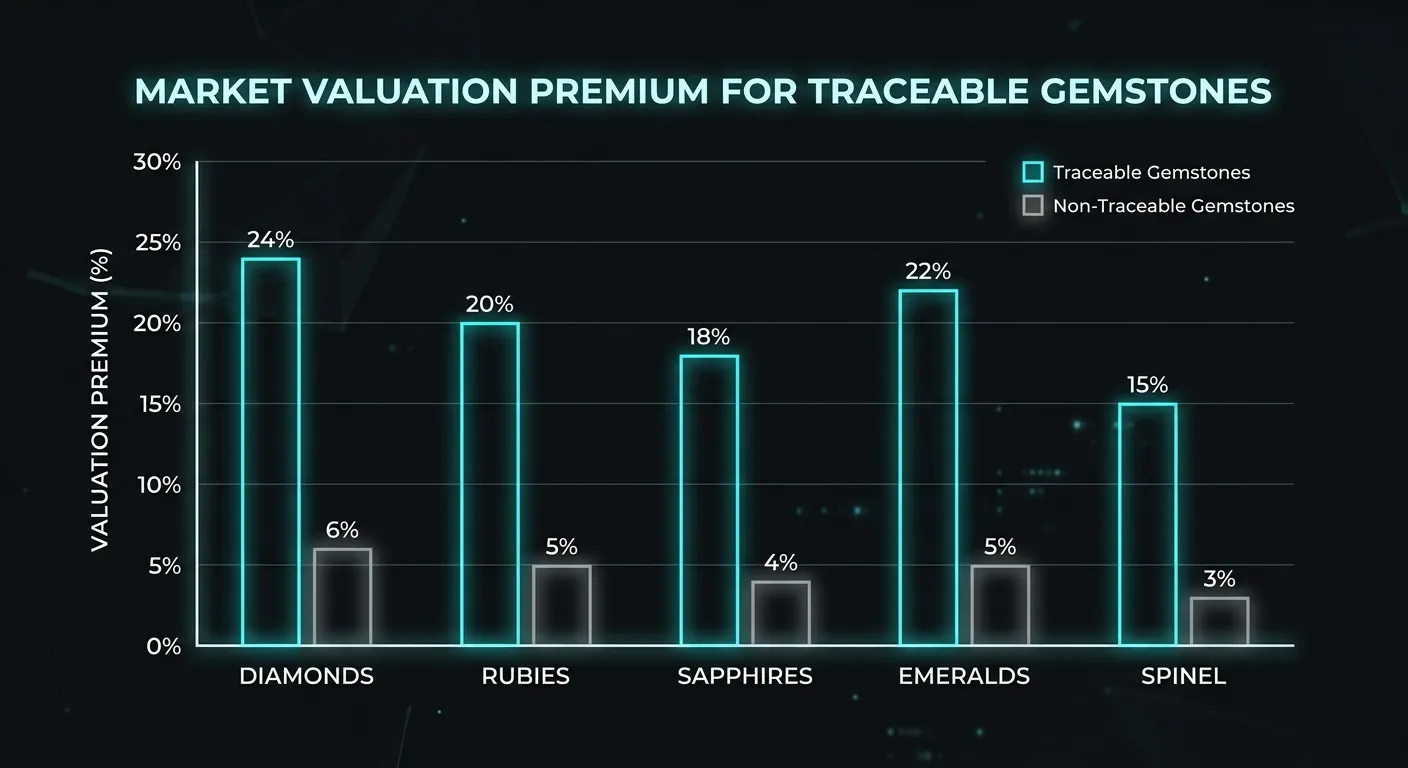
In this context, ethically sourced high-quality stones with immutable digital provenance (a documented, tamper-proof history of origin) often command a multiplier of three to five times the value of untraceable commercial-grade equivalents. This premium reflects the reduction in exposure to regulatory penalties and reputational damage. Retailers and institutional purchasers increasingly view supply chain transparency as a critical factor in asset valuation, beyond merely a marketing differentiator.
Global Market Forecast and Bulk Procurement
Macroeconomic projections for the sector appear robust, with the U.S. specialized crystal industry expected to approach $1.8 billion in value, while the global spiritual jewelry market is forecasted to expand to approximately $3.2 billion. To capitalize on this growth, commercial entities are increasingly buying bulk crystals from mine directly—a segment anticipated to grow by nearly 18% by 2026. This direct-to-source approach eliminates intermediary markups and substantially decreases chain-of-custody risks.
Scaling bulk procurement, however, requires stringent operational oversight. Leading ethical crystal wholesale suppliers are investing in remote sensing technologies and AI-driven prospectivity analysis to identify high-yield mineral veins while minimizing ecological disruption.
This shift aligns closely with Environmental Impact Assessments tailored to commercial crystal extraction, ensuring operations comply with evolving sustainability mandates.
Core Industry Standards and Evaluation Metrics
Recognized Certification Frameworks
Navigating the increasingly complex regulatory environment necessitates reliance on established certification frameworks. The following standards form the baseline for sustainable mining certification in commercial mineral procurement:
-
The Responsible Jewellery Council (RJC) Code of Practices
Provides comprehensive guidelines addressing ethical, social, and environmental responsibilities, mandating strict adherence to human rights and the fair treatment of workers throughout the supply chain.
-
The Kimberley Process Certification Scheme (KPCS)
Primarily targets the exclusion of conflict diamonds from the market, though critiques highlight its limited scope regarding environmental and local human rights concerns.
-
SCS Global Services Certification
An important verification system for recycled metals and lab-grown materials that quantifies sustainability metrics, lending scientific rigor to claims of reduced carbon footprints.
-
Fairtrade and Fairmined Standards
Ensure that artisanal and small-scale miners receive fair wages and operate under safe, regulated conditions, supporting social equity and responsible mineral resource management.
Supply Chain Audit Protocols
Securing ethical sourcing and quality assurance increasingly depends on robust, multi-tiered auditing systems embedded within procurement contracts:
Blockchain Traceability
Employs distributed ledger technology to create an immutable record that tracks minerals from extraction through retail, thereby ensuring sustainable certification and traceability cannot be retroactively altered.
Closed-Loop Audits
Confirming mining operations recycle process fluids to reduce water consumption by up to 85%, minimizing environmental impact.
Post-Extraction Rehab
Financial and operational commitments to environmental restoration and reforestation after mine depletion are critical evaluation metrics.
Third-Party Inspections
Independent, unannounced audits safeguard compliance with conflict-free mineral verification and global labor standards, enforcing zero tolerance for child or forced labor.
Practical Applications and the Cost of Ownership
Niche Commercial Applications
Beyond conventional jewelry markets, ethical crystal suppliers are capitalizing on low-volume, high-margin niches. Architectural and luxury interior projects are increasingly incorporating large-scale, ethically sourced geodes into commercial and wellness environments. Additionally, precision-cut quartz remains vital in electronics and aerospace industries, where material purity and traceability are essential.

These specialized sectors demand flawless mine-to-market traceability and rigorous supply chain audit mechanisms. Corporate clients frequently require exhaustive provenance documentation to fulfill ESG (Environmental, Social, and Governance) compliance mandates. Without verifiable data, even high-quality raw materials become commercially nonviable.
True Maintenance and Holding Costs
The total Cost of Ownership for ethical crystals extends well beyond initial acquisition prices. Maintaining responsible mineral resource management involves ongoing expenses such as annual third-party audits, blockchain ledger maintenance, and premium logistics fees to safely transport fragile, high-value items.
Despite these upfront costs, investing in sourcing transparency and ethical mining generates long-term risk mitigation benefits. Businesses benefit from insulation against abrupt regulatory changes and supply disruptions. Notably, only about 11% of standard diamonds are fully traceable, so verified inventory significantly reduces financial exposure to asset devaluation.
Risk Management and Sourcing Pitfalls
Identifying Greenwashing
The prevalent risk of greenwashing—misleading or exaggerated claims about environmental or ethical benefits—requires buyers to apply strict analytical frameworks to avoid high-risk assets:
-
Imprecise Geographic Claims: Suppliers citing broad regions like “African Quartz” without specific, auditable mine coordinates should be rejected. Genuine ethical and socially responsible sourcing demands detailed geolocation transparency.
-
Lack of Independent Verification: Internal audits lack credibility; buyers must insist on full disclosure from recognized third-party bodies such as the RJC or SCS Global.
-
Omission of Labor Data: Suppliers proclaiming “eco-friendly” extraction yet withholding labor wage or working condition data present significant red flags. Ethical sourcing mandates transparency regarding human rights.
-
Discontinuous Custody Chains: A continuous, unbroken digital or paper trail from mine to market is essential; failure to provide this classifies inventory as high risk.
Case Study: Navigating Bulk Supply Chain Shifts
In 2023, a leading North American mineral retailer encountered severe margin compression due to escalating import and freight costs originating from Madagascar. Recognizing this unsustainable trajectory, management executed a strategic shift toward local and ethical sourcing. They bypassed traditional wholesale intermediaries, establishing direct procurement relationships with certified small-scale mining cooperatives in closer geographic proximity.

Focusing on materials ethically sourced from Brazil and domestic North American deposits, the company eliminated multiple layers of markup, reducing inbound logistics costs by approximately 20% and decreasing transit times.
This transparent supply chain also enhanced marketing efforts, enabling the retailer to attract consumers searching for mine gemstones near me, boosting local store traffic by 35%. The verified ethical narrative also increased customer retention by 25% over the following year, illustrating that deliberate supply chain restructuring can directly improve profitability.
Conclusion
Final Strategic Outlook
The crystal and gemstone industry is undergoing a profound shift towards radical transparency. For enterprise buyers, investors, and retailers, sustainable certification and traceability have become essential prerequisites rather than optional enhancements. Integration of satellite monitoring, AI-powered prospectivity tools, and blockchain ledger technology is raising entry barriers and redefining value metrics.
The Path Forward
Procurement strategies must evolve to prioritize verified provenance over volume alone. Whether sourcing industrial-grade quartz or premium decorative amethyst, adherence to measurable ESG compliance and immutable audit trails is imperative. By embedding ethical sourcing as a foundational risk management principle, businesses can secure their supply chains, command premium valuations, and thrive within an increasingly scrutinized global marketplace.